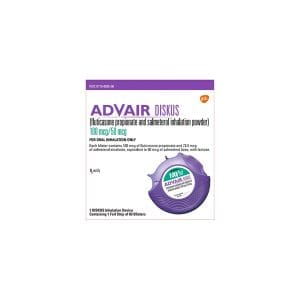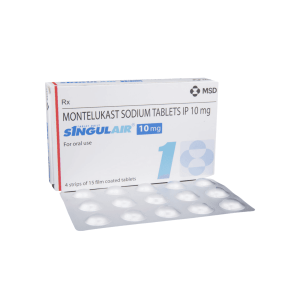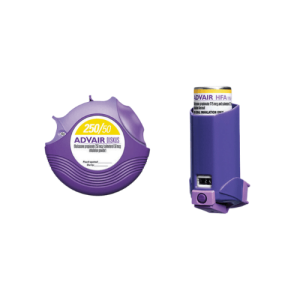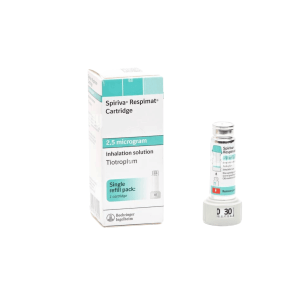
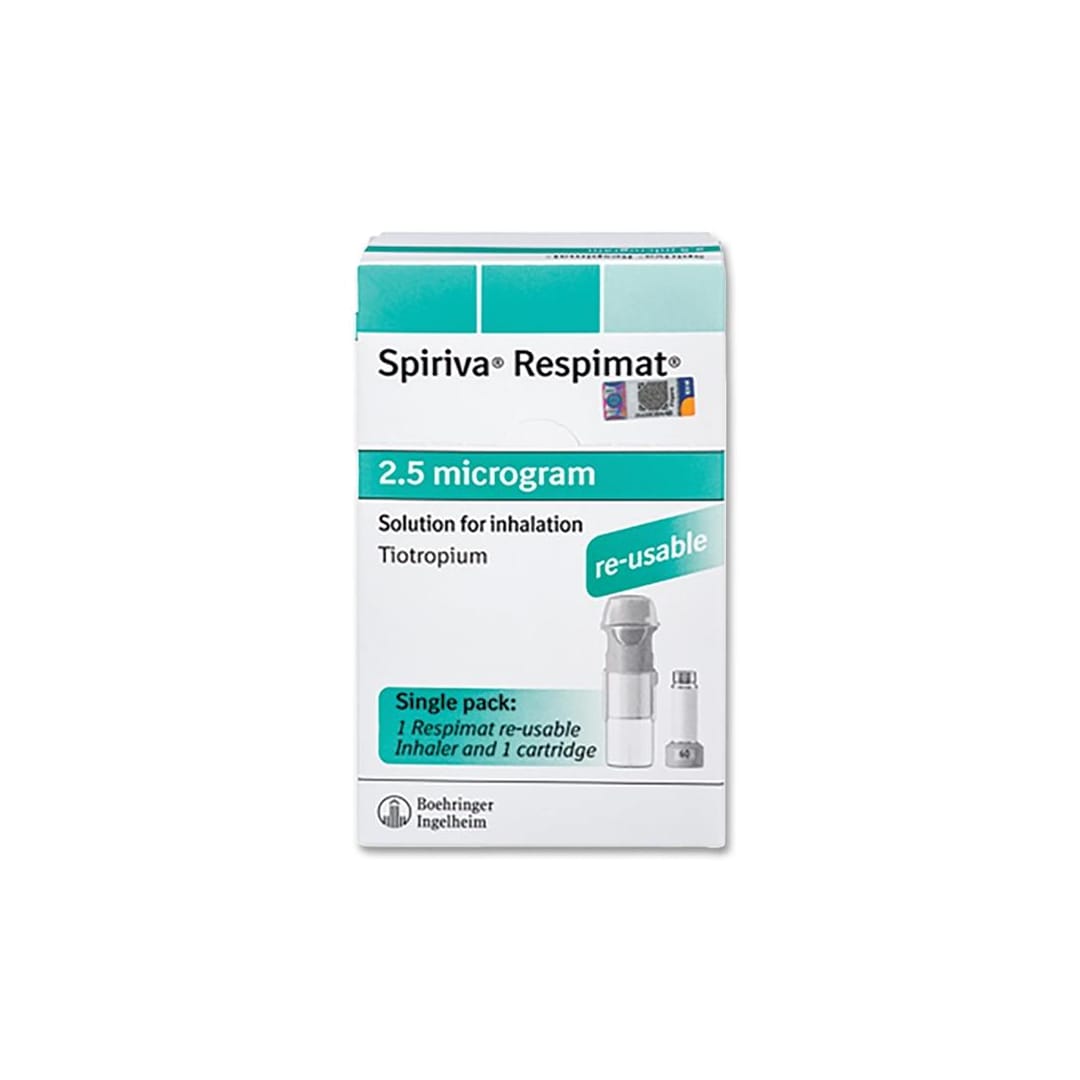
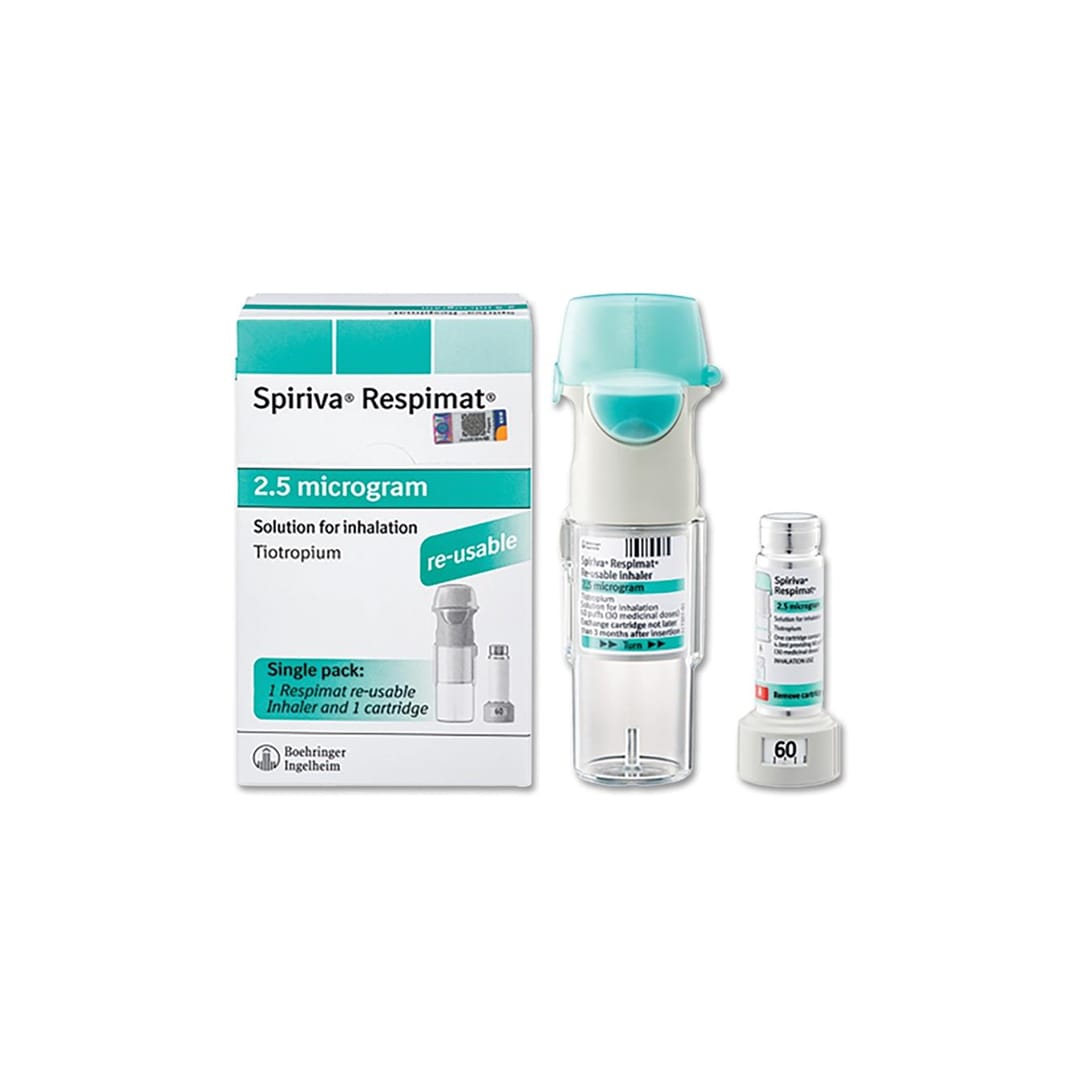
Spiriva Respimat Inhaler is a tiotropium bromide inhalation spray used as a maintenance respiratory medicine. You can buy Spiriva Respimat Inhaler online, view the current amount for the strength shown, and match the device and quantity to your clinician’s directions. The Respimat device delivers a slow-moving mist, so it should be chosen by device type as well as by medicine name.
Spiriva Respimat Price, Strength, and Device Selection
The Spiriva Respimat price depends on the strength, quantity, and inhaler format shown during ordering. A price comparison should be based on the exact Respimat spray device rather than the Spiriva name alone, because other products in the same brand family may use a different delivery system.
Spiriva Respimat is commonly identified online as a tiotropium inhalation spray or tiotropium bromide inhaler. When a strength such as Spiriva Respimat 2.5 mcg appears, it describes the strength per actuation for that product configuration. When the description includes Spiriva Respimat 60 actuations, that refers to the total metered sprays in the inhaler, not a personalized days-supply calculation.
Cost can also change when the quantity changes. If a pack contains more than one inhaler, the total shown may look higher even when the per-inhaler amount differs. If you are reviewing Spiriva Respimat cost without insurance or cash-pay ordering, focus on the visible amount for the exact strength, device, and quantity you intend to receive.
Quick tip: A 60-actuation inhaler does not automatically mean 60 days of treatment.
| Detail | What to Match |
|---|---|
| Product format | Respimat inhalation spray device |
| Active ingredient | Tiotropium bromide |
| Strength wording | Strength per actuation when displayed, such as 2.5 mcg |
| Actuation count | Total metered sprays, such as 60 actuations when shown |
| Quantity | Number of inhalers or packs chosen during ordering |
For broader respiratory browsing, the Respiratory Products category can help you stay within the correct treatment area while keeping device differences clear.
How to Order Spiriva Respimat Online
To order Spiriva Respimat online, choose the Respimat inhalation spray that matches the medicine name, strength, and quantity on your treatment instructions. Keep the prior pharmacy label nearby for refills, because it usually shows the device name, strength per actuation, and total actuations in one place.
Order information should match the person using the inhaler and the exact product requested. Do not substitute a capsule-based inhaler, dry-powder device, or different respiratory medicine unless a clinician has changed the treatment plan. Similar names can create confusion, but the device controls how the medicine is prepared, inhaled, cleaned, and tracked.
Some customers review Spiriva Respimat price from Canada or US delivery from Canada when planning ongoing maintenance therapy. Shipping is a handling step, not a clinical decision; prompt, express, cold-chain shipping language should not be used to assume a treatment start date or change how the inhaler is used after arrival.
If you are refilling, compare the old label against the current device and strength before checkout. A change in inhaler type can change priming steps, inhalation technique, and the way remaining doses are counted.
What Spiriva Respimat Treats
Spiriva Respimat is used for maintenance treatment of chronic obstructive pulmonary disease, often called COPD, and for asthma in certain patients. It is not a rescue inhaler. Sudden breathing attacks require the rapid-relief medicine and emergency plan provided by a clinician.
Tiotropium belongs to a class called long-acting muscarinic antagonists, or LAMAs. In plain language, it helps keep airway muscles from tightening over time. This maintenance role is why consistent use and correct inhaler technique matter more than using extra sprays during sudden symptoms.
People may refer to the medicine as a Spiriva COPD inhaler or Spiriva asthma inhaler. Those terms describe treatment context, but they do not replace the practical selection details: Respimat device, strength per actuation, quantity, and personal directions.
For condition-specific navigation, see Chronic Obstructive Pulmonary Disease and Asthma. These condition sections can help place respiratory products in context, while the final inhaler choice should remain tied to clinician-directed therapy.
Respimat Spray Versus Other Spiriva Formats
The Respimat device creates a slow-moving mist. That is different from a dry-powder inhaler, which depends on a different inhalation technique. Device setup, priming, cleaning, and dose tracking can vary even when the active ingredient is related.
Do not choose by brand family alone. A product with the Spiriva name may still use a different device. Respimat spray and capsule-based inhalers should be treated as different formats because the medicine is delivered to the lungs in different ways.
Why it matters: A correct medicine in the wrong inhaler format can still lead to use errors.
The related Respiratory Resources section may help with inhaler technique topics and maintenance-treatment questions. Use educational reading to support, not replace, the instructions that came with the inhaler.
Storage, Handling, and Travel
Store Spiriva Respimat at room temperature and protect it from freezing, excess heat, and moisture. Keep the cap closed when the inhaler is not in use. Follow the patient instructions for cartridge insertion, priming, routine use, and cleaning the mouthpiece.
The inhaler is both a medicine container and a delivery device. If the cartridge is not inserted correctly, the inhaler is not primed as instructed, or the mouthpiece is blocked, the spray may not be delivered properly. If the device locks, appears damaged, or sprays unevenly, ask a pharmacist or clinician before relying on it for routine maintenance use.
For travel, keep the labeled inhaler with your medication records and protect it from crushing. Avoid storage areas that may become very hot, very cold, or damp. If temperature control is uncertain, do not place the inhaler in luggage compartments where conditions may be extreme.
Track any in-use discard timing provided in the patient instructions. Actuation counters and in-use periods are practical safety tools, but they do not replace individualized directions about how many inhalations to use.
Side Effects, Warnings, and Monitoring
Spiriva Respimat can cause side effects such as dry mouth, sore throat, sinus symptoms, cough, headache, dizziness, constipation, or upper respiratory symptoms. Many effects are mild, but symptoms that persist, worsen, or interfere with daily life should be discussed with a clinician.
Do not use tiotropium if you have had a hypersensitivity reaction to tiotropium, ipratropium, or any inhaler component. Allergy symptoms may include rash, itching, swelling, hives, or trouble breathing. Sudden worsening breathing after using the inhaler can be a sign of paradoxical bronchospasm and needs urgent medical attention.
Avoid spraying the mist into the eyes. People with narrow-angle glaucoma symptoms should seek prompt care for eye pain, red eyes, blurred vision, or halos around lights. Tiotropium may also worsen urinary retention, especially in people with prostate or bladder problems. Trouble urinating, painful urination, or a weak stream should be reported quickly.
Review your medicine list for other anticholinergic drugs, including ipratropium and some medicines used for bladder symptoms, stomach cramps, motion sickness, or allergies. Combining medicines with similar anticholinergic effects may increase dry mouth, constipation, blurred vision, dizziness, or urinary problems.
- Rescue use: Spiriva Respimat is not for sudden breathing attacks.
- Eye exposure: Keep mist away from the eyes.
- Allergy signs: Treat swelling, hives, or breathing trouble urgently.
- Urinary symptoms: Report new trouble urinating promptly.
- Device function: Follow priming, cleaning, and counter instructions.
Monitoring is especially important when symptoms change. Increased rescue inhaler use, more nighttime symptoms, worsening shortness of breath, or new side effects can mean the treatment plan needs clinical review instead of a simple repeat purchase.
Refill Checks and Common Use Questions
Before a Spiriva Respimat refill, compare the previous label with the inhaler you are about to receive. The most important refill details are the full product name, Respimat device, strength per actuation, total actuations, and quantity.
Do not use the actuation count to change the daily amount. Some directions may involve more than one actuation for a dose, and that instruction belongs to the treatment plan. If you are unsure how long an inhaler should last, ask the clinician or pharmacist who can connect the counter, directions, and refill timing.
Spiriva Respimat is a controller medicine. It is generally used to help manage ongoing airway tightness, wheeze, and shortness of breath over time. It should not replace a separate rescue inhaler if one has been provided.
Technique matters with a mist inhaler. If you cough after spraying, taste medicine unexpectedly, see spray escaping from your mouth, or feel unsure about cartridge setup, ask for a technique review. A small device-use issue can make maintenance therapy less reliable.
Compare With Related Respiratory Choices
Related respiratory products may treat similar conditions, but they are not automatic substitutes. Compare active ingredients, device type, strength, quantity, and clinician instructions before switching between inhalers.
Spiriva HandiHaler is a capsule-based dry-powder format, while Spiriva Respimat is a tiotropium inhalation spray. The two formats require different preparation and inhalation steps. Trelegy Ellipta is a different respiratory inhaler with multiple active ingredients and a different treatment role.
When considering alternatives, ask whether the goal is to adjust maintenance therapy, add another controller, simplify inhalers, or address worsening symptoms. Those are clinical decisions, not price-only decisions. For browsing within the same therapeutic area, the respiratory category and respiratory articles can help keep comparisons organized without mixing device formats.
Authoritative Sources
Use official prescribing information, patient instructions, and the pharmacy label that came with the inhaler when checking safety and device-use details. These sources define approved uses, contraindications, warnings, common adverse reactions, priming steps, cleaning instructions, and patient-specific directions.
- Prescribing information: Confirms approved treatment uses, warnings, contraindications, and adverse reactions.
- Patient instructions: Explains cartridge insertion, priming, inhalation steps, cleaning, and device handling.
- Pharmacy label: Shows the directions, quantity, and refill information for the person using the inhaler.
This content is for informational purposes only and is not a substitute for professional medical advice.