


Key Takeaways
- Different clinical patterns guide the initial classification.
- Confirm with glucose metrics, A1C, and antibody tests.
- Use ADA and WHO thresholds for consistency.
- Reassess when features conflict or evolve.
Accurate diagnosis of diabetes guides safe therapy, risk screening, and education. This article explains how clinicians separate autoimmune type 1 from insulin-resistant type 2 using history, examination, and confirmatory testing.
Diagnosis of Diabetes: Distinguishing Type 1 from Type 2
Misclassification can delay appropriate therapy and increase complications. Type 1 diabetes is an autoimmune process that destroys beta cells, often leading to absolute insulin deficiency. Type 2 diabetes involves insulin resistance with relative insulin deficiency and a stronger link to metabolic syndrome. The diagnostic goal is correct classification at presentation, then ongoing validation over time.
Clues include age at onset, tempo of symptoms, weight change, and presence of ketosis. Autoimmune markers, endogenous insulin production, and treatment response add evidence. When uncertainty persists, start safe glucose control and repeat testing once the patient stabilizes. For context on prognosis considerations in autoimmune disease, see Type 1 Diabetes Life Expectancy for long-term outcomes background.
Clinical Clues: Onset, Signs, and Risk Factors
Classic diabetes symptoms include polyuria, polydipsia, weight loss, blurry vision, and fatigue. Type 1 often presents abruptly over weeks with rapid weight loss, nausea, or ketoacidosis. Type 2 usually emerges gradually, sometimes detected during routine labs or preoperative evaluations. Obesity, family history, and acanthosis nigricans point toward insulin resistance.
Examine for dehydration, abdominal pain, rapid breathing, or altered mentation when ketoacidosis is a concern. Review medications such as glucocorticoids that can raise glucose. Stress hormones may worsen hyperglycemia during illness. For background on stress and glycemia interactions, see Stress And Diabetes for mechanisms tied to cortisol.
Public health sources summarize symptom patterns consistently; review the CDC symptoms overview for accessible examples and red flags.
Laboratory Confirmation and Autoimmunity Markers
After clinical assessment, confirm with plasma glucose and A1C. The main types of blood sugar test include fasting plasma glucose (FPG), 2-hour oral glucose tolerance test (OGTT), random plasma glucose, and A1C. Consider the patient’s hydration, anemia risk, and recent transfusions, which can skew A1C. When the clinical picture is mixed, add C-peptide and pancreatic autoantibodies.
Insulin therapy often begins soon after classification, especially when ketosis risk is high. Practical skills matter once insulin is prescribed; for safe administration techniques, see How To Use Insulin Pen for stepwise guidance.
Autoantibodies and C-Peptide Interpretation
Autoimmune diabetes is supported by positive GAD65, IA-2, ZnT8, islet cell antibodies (ICA), or insulin autoantibodies (IAA). A low or falling C-peptide (endogenous insulin marker) suggests beta-cell failure and favors type 1. However, C-peptide fluctuates with glucose and meals; obtain fasting or stimulated measurements consistently. Antibodies may be negative early or late, so a single negative panel does not exclude autoimmunity. In older adults or those with gradual onset, consider latent autoimmune diabetes in adults (LADA) when insulin needs rise quickly. Repeat testing if the course conflicts with the initial label.
Glycemic Ranges and Age Considerations
Reference intervals help interpret results across ages and comorbidities. Clinicians often use a normal blood sugar levels chart to frame expectations, while remembering units and lab methods vary. Younger adults generally tolerate lower targets; older adults with comorbidities may use more conservative ranges to avoid hypoglycemia. Medications, renal function, and anemia can shift optimal targets.
Interpret fasting, premeal, and postmeal values in context. Older patients may show postprandial spikes from impaired first-phase insulin release, even when fasting glucose seems acceptable. For a primer on low glucose states and differential diagnosis, see Fasting Hypoglycemia for mechanisms and thresholds that contrast with hyperglycemia.
Diagnostic Thresholds: ADA and WHO Criteria
Use population-validated thresholds to standardize classification. Common thresholds include FPG ≥126 mg/dL (7.0 mmol/L), A1C ≥6.5% using NGSP-certified methods, 2-hour OGTT ≥200 mg/dL (11.1 mmol/L), or random glucose ≥200 mg/dL with classic symptoms. The ada criteria for diagnosis of diabetes emphasize confirmation by a repeat test on a different day if the patient is clinically stable.
Where guidelines differ slightly, align with local practice and lab certification. The ADA Standards of Care summarize testing performance and thresholds across populations. For global context, the WHO diagnostic criteria describe classification and test use worldwide. For further context pieces on diagnostic care, browse our Diabetes Articles for guideline explainers and updates.
At-Home and Point-of-Care Testing Limits
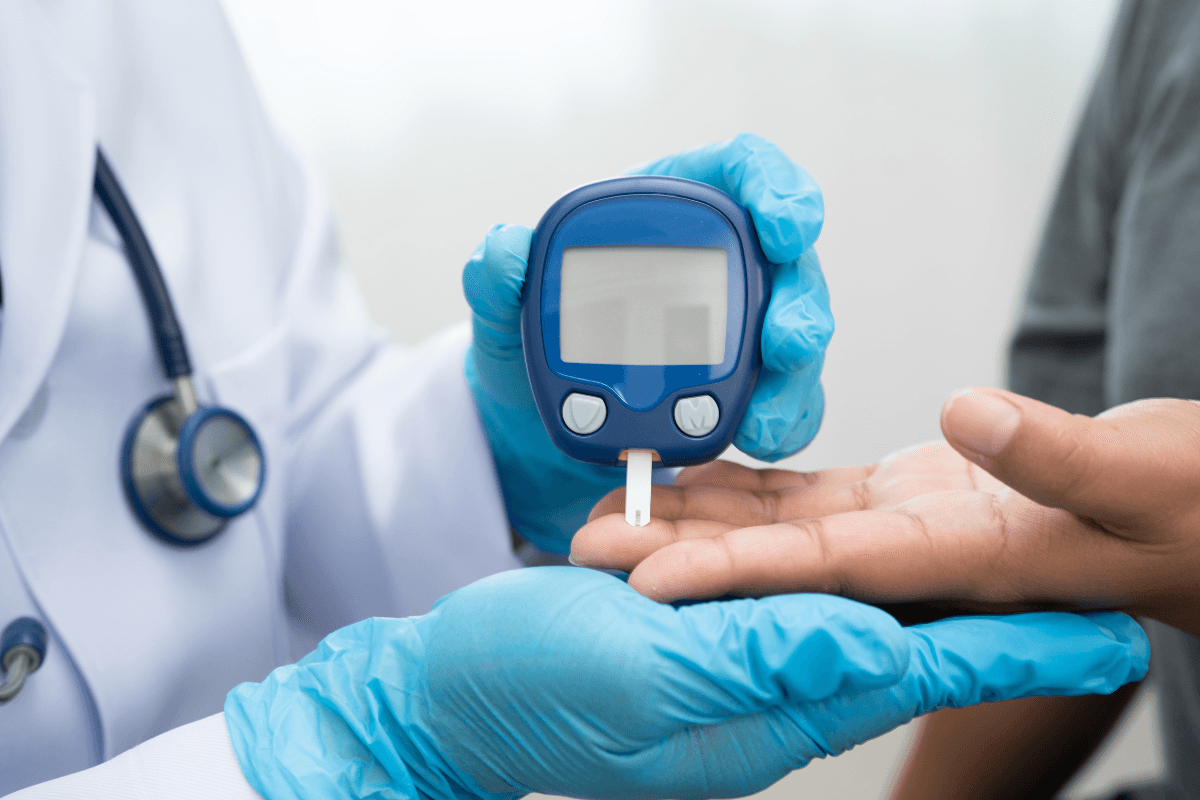
People often ask about how to test for diabetes at home. Home glucometers and continuous glucose monitors help track trends, but diagnosis still relies on lab-based plasma glucose or A1C. CLIA-waived A1C devices can guide care, yet confirmatory testing is recommended before labeling a lifelong condition. Urine glucose strips can detect marked hyperglycemia but miss milder elevation.
Smartphone-connected meters and CGM apps assist pattern recognition and timing of checks. They are valuable for titration after diagnosis, particularly in type 2. For broader self-care strategies around daily management, see Living With Diabetes to align monitoring with routines and nutrition.
Random and Postprandial Glucose Interpretation
Random testing is convenient in acute care or urgent visits. A result within the random blood sugar normal range lowers immediate concern, but clinical judgment still matters. Recent meals, stress, infections, or steroid bursts can distort readings. When random values are borderline, schedule fasting or OGTT confirmation under stable conditions.
Postprandial spikes may be the earliest sign of dysglycemia, especially in older adults or those with central adiposity. Consider OGTT or standardized post-meal checks if A1C is borderline but symptoms continue. Dietary carbohydrate quality strongly affects postprandial peaks; for meal-related responses, see Rice And Diabetes to understand rapidly absorbed starch effects.
Common Pitfalls and Special Cases
Several scenarios blur the lines between type 1 and type 2. The prediabetes diagnosis criteria capture elevated risk before overt disease; confirm progression with repeat testing. Latent autoimmune diabetes in adults can resemble type 2 at onset but advances to insulin need quickly. Ketosis-prone type 2 appears in some ethnic groups, with transient insulin dependence around diagnosis.
Pregnancy introduces gestational diabetes, which uses distinct screening steps and targets. Aging changes physiology; consider comorbidities and functional status when interpreting thresholds around midlife and beyond. For therapy considerations in insulin sensitization, the article Pioglitazone Mechanism Of Action explains how thiazolidinediones improve peripheral uptake and may guide background knowledge.
Care Pathway After Classification
Treatment choice follows type. Type 1 requires insulin from diagnosis; basal-bolus regimens are common. For basal options comparison and dose form factors, see Lantus Cartridges for context on long-acting insulin formats, and consider Tresiba Flextouch Pens when reviewing ultra–long-acting alternatives in clinical practice.
Type 2 usually starts with lifestyle measures and metformin, then adds agents based on A1C and comorbidities. For background on extended-release metformin, see Glumetza as a formulation example. Cardiometabolic risk reduction may include SGLT2 inhibitors; Dapagliflozin illustrates this class. When combination therapy is needed, Janumet XR shows how DPP-4 inhibition pairs with metformin. For mealtime coverage education, review Humalog KwikPen as a rapid-acting option to understand dosing logistics.
Education should cover injection technique, hypoglycemia prevention, and sick-day rules. After stabilization, revisit the initial label if the clinical course diverges from expectations. For family impact and coping, see Diabetes Burnout for strategies to sustain engagement over time.
Recap
Differentiating autoimmune type 1 from insulin-resistant type 2 relies on history, examination, glucose metrics, A1C, C-peptide, and autoantibodies. Use consistent thresholds from trusted guidelines, and repeat testing when the picture is mixed. Classification informs safe therapy and risk screening.
Prioritize patient safety during uncertainty, treat hyperglycemia promptly, and gather more evidence as needed. Document reasoning, communicate expected follow-up, and adapt the plan as new data emerges.
Note: Guidelines evolve; align with local standards and certified laboratories for testing methods and targets.
This content is for informational purposes only and is not a substitute for professional medical advice.











